The New Search Playbook: SEO, AIO, GEO & the AI Revolution Reshaping Digital Visibility in 2026
By D2 Branding of Tulsa | May 2026
The rules of search have been rewritten. If you’re still running the same SEO playbook you used in 2022 — chasing keyword rankings, stacking backlinks, and counting page-one positions — you’re competing in a game that has fundamentally changed around you. In 2026, the question is no longer just where do you rank? It’s does AI know who you are, trust what you say, and choose to cite you?
The emergence of AI-powered search has introduced a new vocabulary that every business owner and marketer needs to understand: SEO (Search Engine Optimization), AIO (AI Optimization), GEO (Generative Engine Optimization), and AEO (Answer Engine Optimization). These aren’t competing buzzwords — they’re four interconnected layers of a modern visibility strategy. Understanding how they work together, and how to implement them, is now the central challenge of digital marketing.
What Changed — And Why It Happened Fast
For two decades, Google’s search results page was a predictable list of ten blue links. You optimized your site to climb that list, users clicked the highest-ranking result, and traffic flowed. The system rewarded those who best understood how Google’s algorithms evaluated content.
Then generative AI arrived and rewrote the interface. Google’s AI Overviews, which now appear in an estimated 30–45% of informational searches, synthesize answers from multiple sources directly at the top of the results page. ChatGPT, Perplexity AI, Microsoft Copilot, and Google’s own AI Mode are fielding millions of questions per day — and answering them directly, without always sending users to a website at all.
The numbers are striking. AI Overviews have been shown to reduce organic click-through rates by as much as 61% for informational queries. That dramatic drop forces a fundamental strategic pivot: from traffic-centric metrics to visibility-centric metrics. A business that appears in an AI-generated answer — even without a click — is building brand recognition, establishing authority, and influencing buying decisions in ways that a buried page-three ranking never could.
The companies winning in 2026 aren’t the ones who abandoned SEO. They’re the ones who expanded their strategy to encompass the entire new ecosystem of AI-driven discovery.
The Four Pillars: SEO, AIO, GEO, and AEO Defined

SEO — The Foundation Still Stands
Search Engine Optimization hasn’t died. It has evolved into something deeper and more demanding. The core elements — technical site health, crawlability, quality content, authoritative backlinks — remain essential. In fact, research shows that 76% of AI Overview citations are pulled from pages already ranking in Google’s top 10 organic results. You cannot skip SEO and hope to appear in AI-generated answers. Strong traditional SEO is the prerequisite for everything that follows.
What has changed is how SEO works. Google’s AI systems now interpret meaning, not just match keywords. They use semantic analysis and entity mapping to understand what a page is about and how it relates to broader topics. Keyword stuffing is not just ineffective — it actively signals low quality to systems designed to evaluate genuine understanding. In 2026, SEO means demonstrating real expertise through content that fully answers user intent, not just placing target phrases in title tags and H1s.
Technical SEO also remains non-negotiable. Fast load speeds, mobile responsiveness, clean URL structures, functional XML sitemaps, and proper robots.txt configuration are the connective tissue that allows AI crawlers to access and learn from your content. If an AI engine cannot crawl your site efficiently, all downstream optimization efforts are wasted.
AIO — Getting Into the AI Answer
AI Optimization is the practice of structuring and creating content specifically so that AI systems can accurately interpret, evaluate, and reference it when generating answers. Where traditional SEO asks “how do I rank for this keyword?”, AIO asks “can AI confidently use this content to answer a user’s question?”
AIO is the layer that closes the gap between ranking well in traditional search and actually appearing in AI-generated summaries. Many businesses have experienced a baffling phenomenon in 2026: stable or improving organic rankings, but declining visibility. That’s because AI Overviews are increasingly replacing featured snippets and top-of-page results, compressing visibility toward a handful of sources that AI systems trust and cite. AIO addresses this gap directly.
The core AIO practice is formatting intelligence — structuring content in the logical, scannable patterns that AI systems favor. This means leading each section with a direct answer, followed by explanation and detail. It means using clear question-based headings (which mirror how users actually query AI tools). It means writing in concise, quotable passages — short, factual statements that can stand alone as citations — rather than long, meandering paragraphs. AI systems pull individual passages, not entire pages, so every section should be able to answer a question on its own.
Content discoverability is also a core AIO concern. If AI crawlers are blocked by your robots.txt — whether intentionally or accidentally — they cannot learn from your content, reference your expertise, or cite your brand. Verifying that AI crawlers have access to your site is a basic but critical step many businesses overlook.
GEO — Controlling Your AI Narrative
Generative Engine Optimization focuses on a subtler but equally important question: when AI mentions your brand, what does it say? Even when a business appears in AI Overviews or AI-generated answers, the description AI provides might be inaccurate, outdated, incomplete, or simply less compelling than a competitor’s representation.
GEO is the discipline of ensuring that AI systems — whether Google’s Gemini, ChatGPT, Perplexity, or others — describe your business, products, and expertise accurately and favorably. This involves building consistent brand signals across the web, ensuring your business is referenced and described in the same way across your own site, third-party publications, press coverage, industry directories, and review platforms.
Topical authority is central to GEO. AI systems give preference to sources that demonstrate consistent, deep expertise on a subject over time. Publishing comprehensive, interconnected content that covers a topic from multiple angles — rather than isolated posts chasing trending keywords — signals to AI that your brand is a genuine authority worth citing repeatedly.
Building citations from reputable external sources strengthens GEO significantly. When authoritative publications, industry databases, local directories, and news sources reference your business with consistent descriptions, AI systems can build confident, accurate representations of who you are. This is why PR, thought leadership, and community presence have become genuine SEO and GEO assets in 2026, not just nice-to-haves.
AEO — Answering Before the Click
Answer Engine Optimization targets AI-powered answer systems specifically — the platforms that retrieve web content, synthesize it, and deliver structured answers rather than link lists. This includes not just Google AI Mode but also ChatGPT’s browsing capabilities, Perplexity AI, Microsoft Copilot, and voice search interfaces.
AEO best practice centers on creating content that directly and concisely answers the specific questions your target audience is asking. This means anticipating natural language queries (“What should I look for in a Tulsa web designer?” rather than “web designer Tulsa”) and structuring content to respond with clear, authoritative answers that AI can extract and present with confidence.
Google’s Policies and Position in 2026
Google has been unusually transparent about how its AI features interact with websites. According to Google Search Central documentation, there are no additional technical requirements to appear in AI Overviews or AI Mode beyond standard SEO best practices. Google does not require special AI-specific files, new markup formats, or unique optimization signals beyond what good SEO already demands.
Google’s official guidance is clear: make sure the page meets technical requirements for indexing, follow Search policies, focus on creating helpful and reliable people-first content, and ensure Googlebot can crawl the site without restrictions. A page must be indexed and eligible to appear in Google Search to be considered as a supporting link in AI Overviews or AI Mode.
The March 2026 core update brought meaningful changes to structured data strategy. Google narrowed rich result eligibility for schema types that had been widely abused — particularly FAQ, Review, and How-To markup on pages where the schema described supplementary rather than primary content. The update tightened the requirement that schema must accurately reflect the main purpose of the page, not be deployed as a SERP manipulation tactic.
Critically, the same update elevated structured data’s role as a trust and entity verification signal within Google’s AI systems. AI Mode now uses structured data for entity resolution and claim verification during answer synthesis. This means that clean, accurate schema — Organization markup, Article schema, LocalBusiness for local businesses, Author schema with verified credentials — increases the probability of AI citation even when traditional rich results are not displayed.
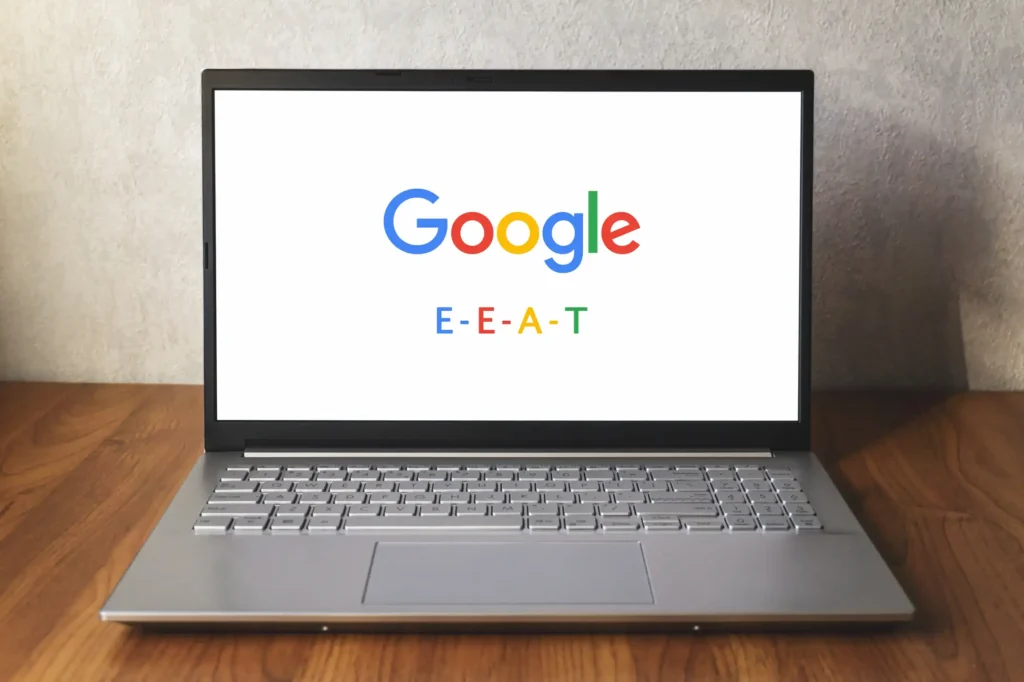
E-E-A-T (Experience, Expertise, Authoritativeness, and Trustworthiness) remains central to Google’s evaluation framework. Author credibility has evolved from a bonus to a core ranking signal. Pages with clear author attribution linked to detailed bios, professional credentials, or verifiable expertise consistently outperform anonymous content in AI Overview selection. This is one of the most actionable signals any business can address immediately: give your content human faces, real names, and verifiable credentials.
Best Practices for Multi-Platform AI Visibility in 2026
Achieving visibility across AI platforms — Google, ChatGPT, Perplexity, Bing Copilot, and beyond — requires treating AI discoverability as a unified discipline, not a platform-by-platform checklist. The following practices form the core of a comprehensive 2026 AI visibility strategy.
Build a technically sound foundation. Every AI visibility strategy begins with a website that AI crawlers can access cleanly. Verify that your robots.txt does not inadvertently block AI crawlers. Ensure your sitemap is current and submitted to Google Search Console. Maintain fast load speeds and mobile optimization. These are table stakes, but a surprising number of businesses fail on them.
Write for humans first, structure for AI second. The AI systems that surface and cite content are trained to prefer genuinely helpful, well-organized information. Write content that deeply and honestly addresses your audience’s real questions, then structure it with clear question-based headings, concise opening answers for each section, and scannable passage-level clarity. Every section should be capable of answering a specific question without requiring the rest of the page for context.
Build topical authority through content depth, not breadth. Rather than publishing dozens of thin posts on loosely related subjects, build comprehensive content clusters around your core areas of expertise. A Tulsa business that wants to be cited as an authority on, say, commercial roofing should have interconnected content covering roofing materials, local climate considerations, cost factors, the installation process, maintenance, and case studies — not one keyword-optimized page and a handful of scattered blog posts. AI systems reward semantic depth and consistency.
Implement entity-aligned structured data. Deploy Organization schema with complete business information including your address, phone, website, and links to authoritative external profiles (LinkedIn, Google Business Profile, industry directories). Use Article schema for editorial content with clear Author markup. For local businesses, ensure LocalBusiness schema is complete and accurate. The goal is to give AI systems unambiguous, machine-readable signals about who you are, what you do, and why you’re credible. After the March 2026 update, clean entity schema is among the highest-leverage structured data implementations.
Maintain consistent brand signals across the web. Your business name, description, services, location, and credentials should be described consistently across your website, Google Business Profile, social media profiles, local directories, press mentions, and third-party review platforms. Inconsistency creates ambiguity for AI systems trying to build an accurate representation of your brand. Consistency creates confidence — and confidence drives citations.
Earn citations from authoritative external sources. Being referenced by reputable publications, industry organizations, local news outlets, and authoritative directories remains a powerful signal in the AI era, for the same reason it mattered in traditional SEO: it signals that credible external parties validate your expertise. Invest in PR, submit expert commentary to industry publications, contribute to authoritative platforms, and actively pursue mentions in contexts that matter to your audience.
Optimize for conversational and local queries. AI platforms field a high volume of conversational, natural-language questions. Structure content to match how people actually speak when they query AI tools — in full questions, with local context where applicable. For local businesses, ensuring complete, accurate, and active Google Business Profiles is now also a GEO strategy: Google’s AI draws from GBP data when formulating local answers.
Monitor your AI visibility, not just your rankings. Traditional rank tracking tools show you where pages appear in blue-link results. In 2026, you also need to monitor how — and whether — your brand appears in AI-generated answers. Tools like Semrush’s Enterprise AIO and manual searches on ChatGPT, Perplexity, and Google AI Mode for your target queries reveal your AI share of voice and surface inaccuracies in how AI describes your business. What AI says about you matters as much as where you rank.
Diversify content formats. Early 2026 data shows that pages combining text with images, video, and schema see dramatically higher AI selection rates. Short, focused video content (60–90 seconds addressing a specific question) has shown strong performance in AI Overviews. Infographics and visual explanations add extractable signal that text alone cannot provide. A multi-format content strategy isn’t just better for human engagement — it sends stronger trust signals to AI evaluation systems.
Maintain content freshness. AI systems show a preference for content that is current, accurate, and free of dated references. Regularly auditing and refreshing existing content — updating statistics, revising outdated examples, adding current context — signals freshness and maintains relevance in AI training and retrieval. Your evergreen content should be treated as a living asset, not a set-and-forget publication.
The Integration Imperative: AIO Is the Umbrella
The most important strategic insight for 2026 is this: SEO, AIO, GEO, and AEO are not competing priorities. They are a unified system that must work together. Businesses that treat them as separate initiatives — running an SEO campaign here, adding FAQ schema there, hoping for AI Overview appearances — are sub-optimizing each layer at the expense of the whole.
The optimal approach is sequential and integrated. SEO establishes the technical foundation and organic ranking credibility that AI citation depends on. AIO restructures and formats content so AI systems can extract and reference it with confidence. GEO builds the consistent brand authority across the web that shapes how AI describes your business. AEO ensures your content directly answers the conversational queries your audience is actually using.
The brands winning in 2026 are not the ones who chose between these strategies. They’re the ones who built them as a coherent system — and they didn’t do it alone.
Why This Is the Moment to Act — and Why D2 Branding of Tulsa Is the Partner to Trust

The AI search revolution is not a future event. It is happening right now, reshaping how your potential customers find, evaluate, and choose businesses like yours. Every month that passes without an intentional AI visibility strategy is a month that competitors who are moving faster are claiming the citations, the AI mentions, and the brand authority that should belong to you.
For businesses in Tulsa and across Oklahoma, D2 Branding has been at the forefront of this transformation. As a full-service digital marketing agency, D2 Branding brings together every capability the modern search landscape demands — from technical SEO and website design to content strategy, branding, social media, video production, Google Ads, and the emerging disciplines of AI Optimization and Generative Engine Optimization that define visibility in 2026.
What makes D2 Branding distinctly positioned for this moment is the breadth of their integrated service model. AI visibility isn’t built by an SEO specialist working in isolation — it requires a coordinated effort across content, creative, technical, and brand strategy. D2 Branding’s team delivers all of these under one roof, with deep local market knowledge and a proven track record across industries. Their services span business consulting and fractional CMO offerings to personal branding, business branding, website creation, and full-scale digital marketing campaigns — every element that contributes to a brand AI systems recognize, trust, and cite.
Whether you’re a Tulsa business that has never seriously pursued digital visibility, or an established brand realizing that your current SEO strategy is no longer enough to compete in an AI-first search landscape, D2 Branding is the team equipped to close the gap. Their approach starts where all good strategy starts: with a clear understanding of your business, your audience, and your goals — and builds from there with the technical and creative expertise to execute at the highest level.
The era of earning the citation has begun. To learn more about how D2 Branding can position your business for AI-driven visibility, visit d2branding.com or call (918) 520-8012. In a search landscape being rewritten by AI, having the right partner isn’t a luxury — it’s a competitive necessity.
D2 Branding is a full-service digital marketing agency based in Tulsa, Oklahoma, offering SEO, website design, branding, video production, social media, Google Ads, business consulting, and fractional CMO services. Visit d2branding.com to explore their work and request a quote.